
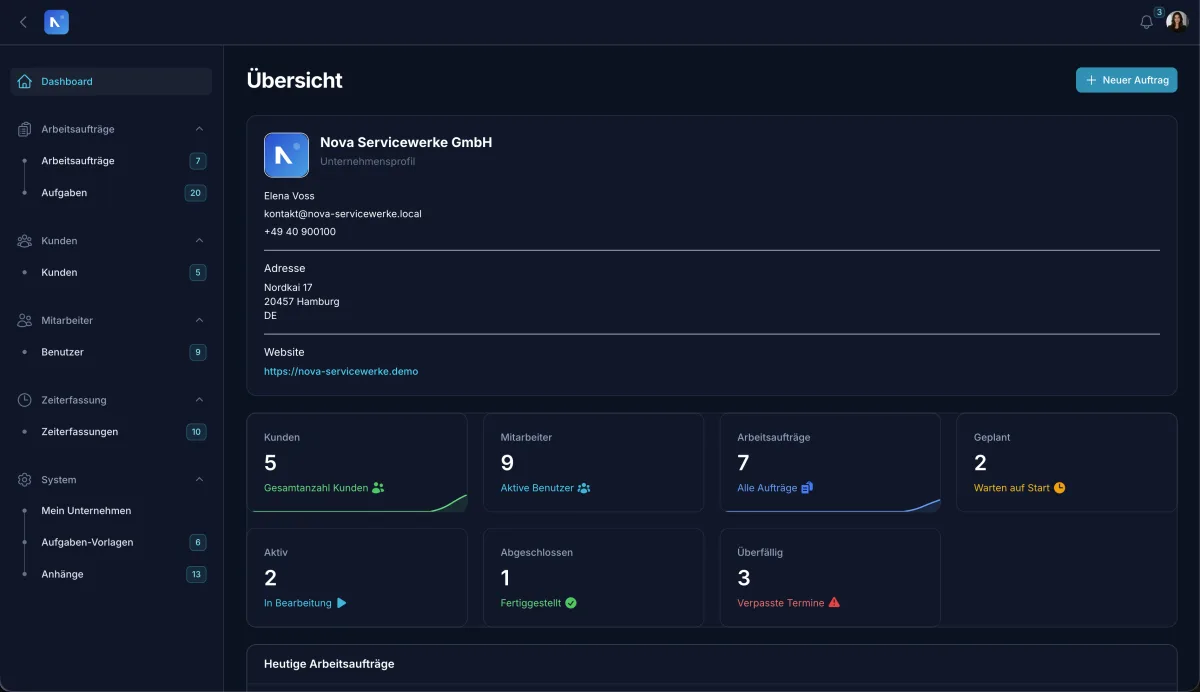
Many service-based businesses still manage their workflows using multiple tools: spreadsheets, messaging apps, emails or even paper.
This often leads to:
lost information
unclear processes
inefficient communication
I wanted to explore how these workflows can be structured within a single application.
That’s how Craftro was created.
Goal of the application
The goal was not to build a typical website or shop, but a system that reflects real business processes.
Core features include:
work order management
customer and location management
time tracking
file and photo handling
clear roles and responsibilities
Why Laravel + Filament?
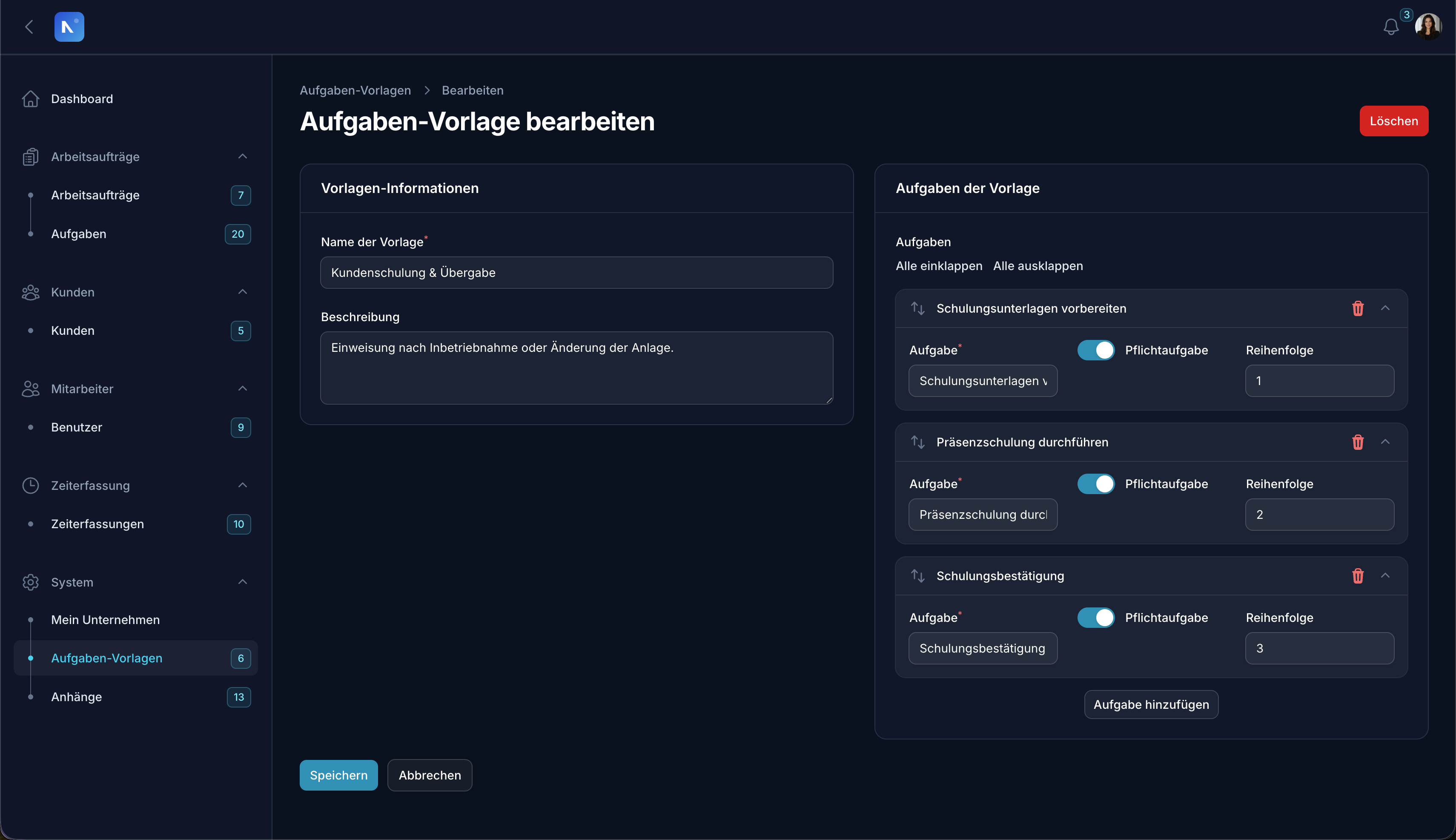
Laravel is a strong foundation for building custom applications.
Combined with Filament, it allows for rapid development of admin panels and structured workflows.
Benefits:
fast development of admin interfaces
clean architecture
easy extensibility
built-in components for forms, tables and actions
This makes it a great stack for business applications.
Implementation
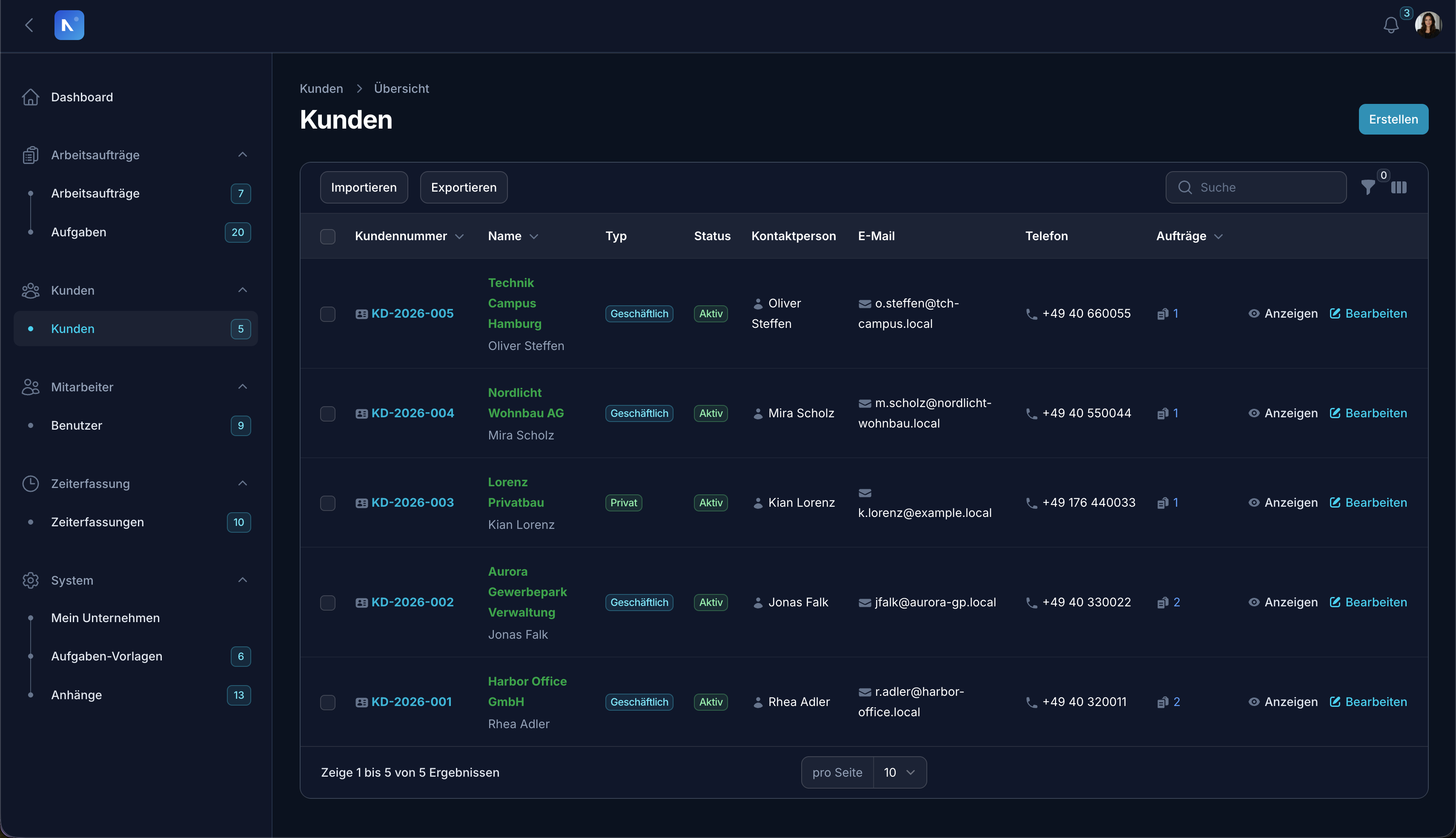
The application is structured around several key areas:
Work orders
Each work order includes:
status
priority
assigned users
tasks
attachments
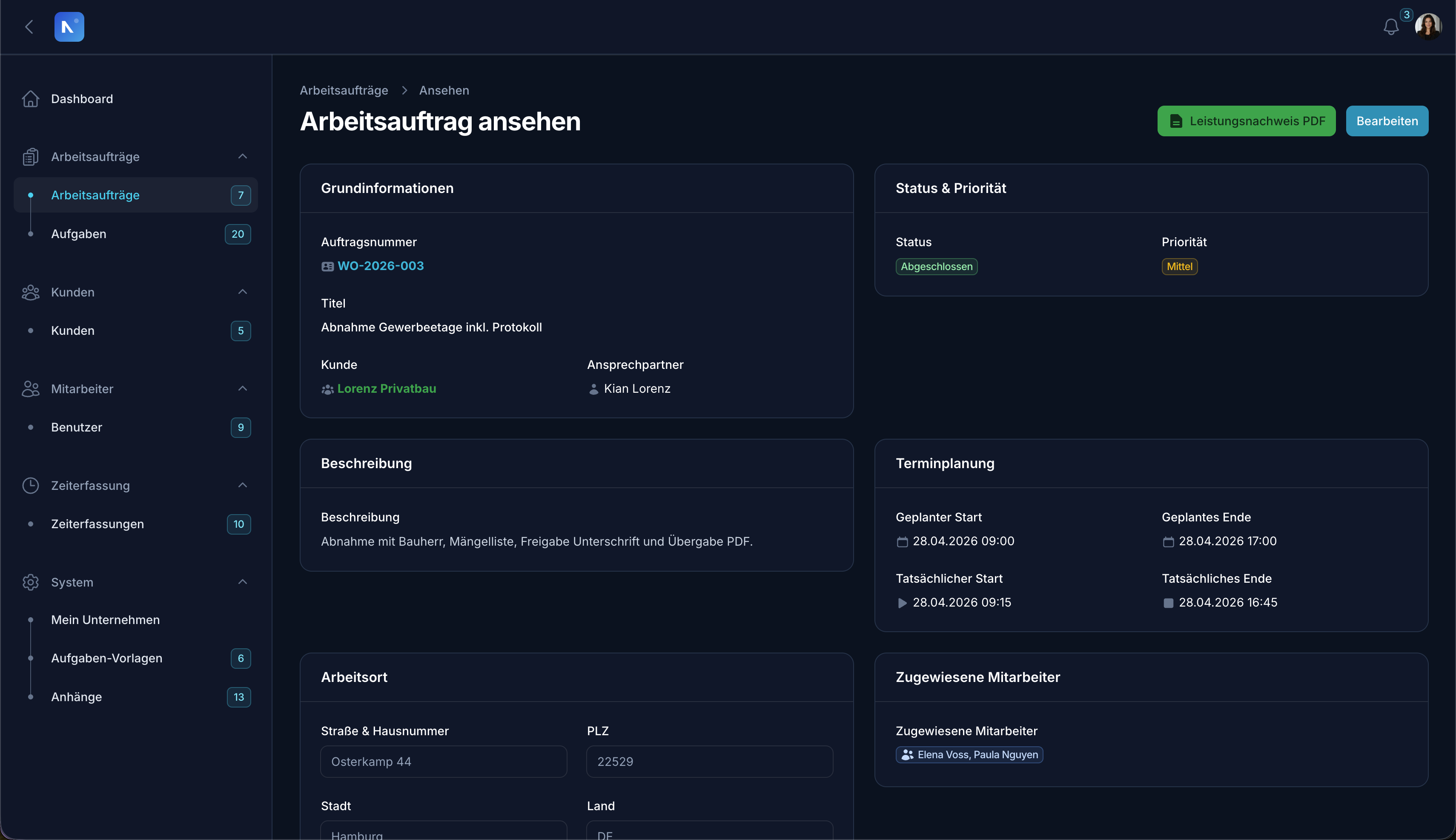
Customers & locations
Customers can have multiple locations, directly linked to work orders.
Time tracking
Users can log time directly on tasks or work orders.
Files & photos
All relevant documents are stored within the context of each work order.
Roles & permissions
Role-based access ensures users only see and manage relevant data.
Challenges
A large part of the work is not UI, but logic:
how data is structured
how real workflows are mapped digitally
how the system remains scalable
These decisions are critical for long-term usability.
Conclusion
Many companies try to adapt their processes to existing tools.
In reality, this often leads to inefficiencies.
Custom applications offer a different approach:
they adapt to the process, not the other way around.
Craftro is an example of what such a system can look like.